Aigerim Suleimenova
What is the attitude towards homosexuals in military in US?
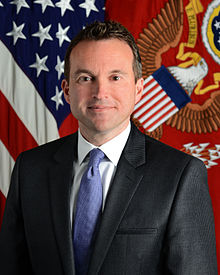
In November 2015, the former President Barack Obama has nominated a new Secretary of Army, and in May, 17 2016 the United States Senate has confirmed nomination. The 22nd Secretary of the Army became Eric Keneth Fanning, who had made a great career as a Congressional staffer, chief management officer for the Department of the Navy, Under secretary of the Air force spending about overall 25 years in government service. However America has a plenty professional military officers, why was this case interesting? The Eric Fanning was the first openly gay in Pentagon . However the situation in last decades was different and gay men and women were not allowed to show their sexual orientation.
The US military policy of 1981 stated ’ “homosexuality is incompatible with military service” is based on the premise that a gay military member’s presence “adversely affects the ability of the Military Services to maintain discipline, good order, and morale.” It was not possible to prohibit the involvement of gay people to the military at all, therefore, in 1994 the President Clinton has adopted the “DADT” policy. “Don’t ask don’t tell policy” stated that homosexual gay and woman are prohibited from serving in US military if they disclose they sexual orientation and only in 2010 the process of ending this “DADT” policy established, therefore from that time homosexual people can serve in military and show their sexuality.
According to study, the 43 % of Americans favored allowing gays to serve in military in 1993/94, however the number has increased dramatically to about 70 %, which means that public became more tolerate. Also as Davis (chapter 2) showed in his national cross section of US adults (mass) and army officers (brass) 16 % of male officers are opposed to “allowing gays and lesbians openly serving and this lead to author’s “finding 6”.
Despite this, according to National Longitudinal study of Adolescent Health (2009) the number of men in military who identified themselves as a gay was approximately the same with those among civilians. This shows that despite the existence of the “DADT” policy the number of homosexuals in military does not decrease, it rather increases and now the representative of gay minority is a head of the largest military service in US. Also what is important Roman and Tarr (chapter 11) argue that when the senior military leaders are selected, the candidates are selected accordingly their “professional background, policy making, experience, personality and political consideration” and what is more important the characteristics that makes a candidate “effective” and here the sexual identity does not matters. Therefore when the question of sexual orientation in military arises, it is more important to look if the person is a professional and does he or she has expertise, responsibility and corporateness.
___________
References:
1. https://informburo.kz/novosti/suhoputnye-voyska-armii-ssha-vpervye-vozglavil-gey.html
2. http://www.rand.org/pubs/periodicals/rand-review/issues/2011/spring/gays.html
3. "H.R.2965 - Dont Ask, Dont Tell Repeal Act of 2010". OpenCongress.org
4. http://biotech.law.lsu.edu/blaw/dodd/corres/html2/d130426x.htm
5. Sexual Orientation and U.S. Military Personnel Policy: An Update of RAND’s 1993 Study, 2010.
6. Sexual Orientation and U.S. Military Personnel Policy: Options and Assessment, RAND Corporation, RAND/MR-323-OSD, 1993, 548 pp., ISBN 0-8330-1441-2.
7. Feaver, Peter, and Richard H. Kohn, ed. 2001. Soldiers and Civilians: The Civil-Military
Gap and American National Security. MIT Press.
8. http://www.military.com/daily-news/2017/01/18/fanning-steps-down-first-openly-gay-service-chief.html
What is the attitude towards homosexuals in military in US?
In November 2015, the former President Barack Obama has nominated a new Secretary of Army, and in May, 17 2016 the United States Senate has confirmed nomination. The 22nd Secretary of the Army became Eric Keneth Fanning, who had made a great career as a Congressional staffer, chief management officer for the Department of the Navy, Under secretary of the Air force spending about overall 25 years in government service. However America has a plenty professional military officers, why was this case interesting? The Eric Fanning was the first openly gay in Pentagon . However the situation in last decades was different and gay men and women were not allowed to show their sexual orientation.
The US military policy of 1981 stated ’ “homosexuality is incompatible with military service” is based on the premise that a gay military member’s presence “adversely affects the ability of the Military Services to maintain discipline, good order, and morale.” It was not possible to prohibit the involvement of gay people to the military at all, therefore, in 1994 the President Clinton has adopted the “DADT” policy. “Don’t ask don’t tell policy” stated that homosexual gay and woman are prohibited from serving in US military if they disclose they sexual orientation and only in 2010 the process of ending this “DADT” policy established, therefore from that time homosexual people can serve in military and show their sexuality.
According to study, the 43 % of Americans favored allowing gays to serve in military in 1993/94, however the number has increased dramatically to about 70 %, which means that public became more tolerate. Also as Davis (chapter 2) showed in his national cross section of US adults (mass) and army officers (brass) 16 % of male officers are opposed to “allowing gays and lesbians openly serving and this lead to author’s “finding 6”.
Despite this, according to National Longitudinal study of Adolescent Health (2009) the number of men in military who identified themselves as a gay was approximately the same with those among civilians. This shows that despite the existence of the “DADT” policy the number of homosexuals in military does not decrease, it rather increases and now the representative of gay minority is a head of the largest military service in US. Also what is important Roman and Tarr (chapter 11) argue that when the senior military leaders are selected, the candidates are selected accordingly their “professional background, policy making, experience, personality and political consideration” and what is more important the characteristics that makes a candidate “effective” and here the sexual identity does not matters. Therefore when the question of sexual orientation in military arises, it is more important to look if the person is a professional and does he or she has expertise, responsibility and corporateness.
___________
References:
1. https://informburo.kz/novosti/suhoputnye-voyska-armii-ssha-vpervye-vozglavil-gey.html
2. http://www.rand.org/pubs/periodicals/rand-review/issues/2011/spring/gays.html
3. "H.R.2965 - Dont Ask, Dont Tell Repeal Act of 2010". OpenCongress.org
4. http://biotech.law.lsu.edu/blaw/dodd/corres/html2/d130426x.htm
5. Sexual Orientation and U.S. Military Personnel Policy: An Update of RAND’s 1993 Study, 2010.
6. Sexual Orientation and U.S. Military Personnel Policy: Options and Assessment, RAND Corporation, RAND/MR-323-OSD, 1993, 548 pp., ISBN 0-8330-1441-2.
7. Feaver, Peter, and Richard H. Kohn, ed. 2001. Soldiers and Civilians: The Civil-Military
Gap and American National Security. MIT Press.
8. http://www.military.com/daily-news/2017/01/18/fanning-steps-down-first-openly-gay-service-chief.html

No comments:
Post a Comment